The Origins of the Earth Houses
From Farmland to Residential Community
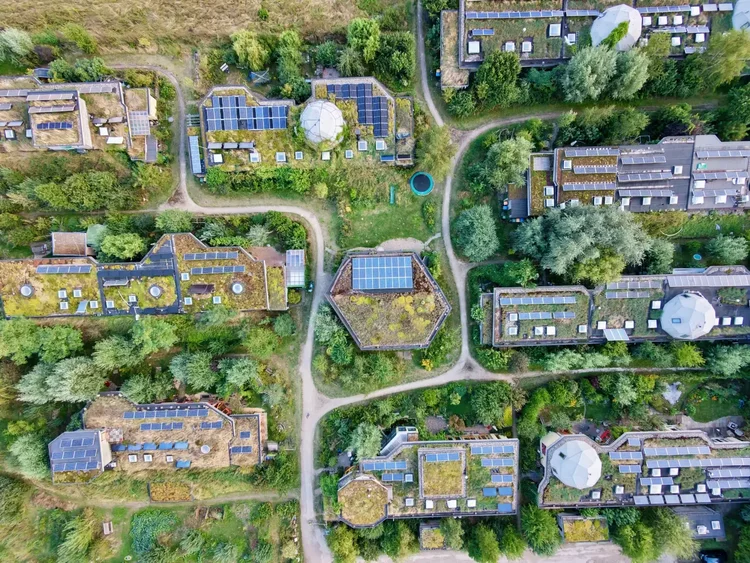
Where our 23 Earth Houses and a shared Central House now stand, there was once nothing but a vast landscape of clay and earth on the outskirts of Olst. Here, using loam, straw, and reused materials, we built our own way of living: building, working, dwelling, and living in harmony with nature, in connection with one another, and as an inspiration to the world around us. That also became our motto. And so, literally sprouting from the ground, a neighborhood grew in which sustainability and connection are the most important principles of life.
But how exactly did it all begin? Every Earth House, every communal meal in the Middenhuis, and every patch of the vegetable garden has a story, and that story began long before the first stone—or rather, the car tire—was laid. It was a story of dreams, perseverance, working together, and a deep belief in an idea that might have seemed impossible on paper.
On this page, we’ll take you through that story: a timeline from the very first plans to the celebration of our tenth anniversary. Read the story of how a barren field in Olst grew into the vibrant, sustainable community that the Aardehuizen are today.
Join us on a journey through our timeline
How the Idea Came About
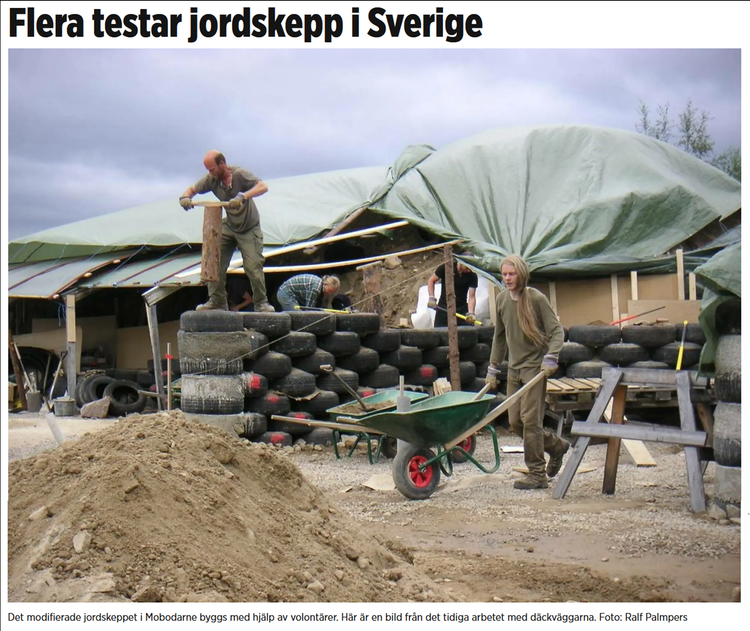
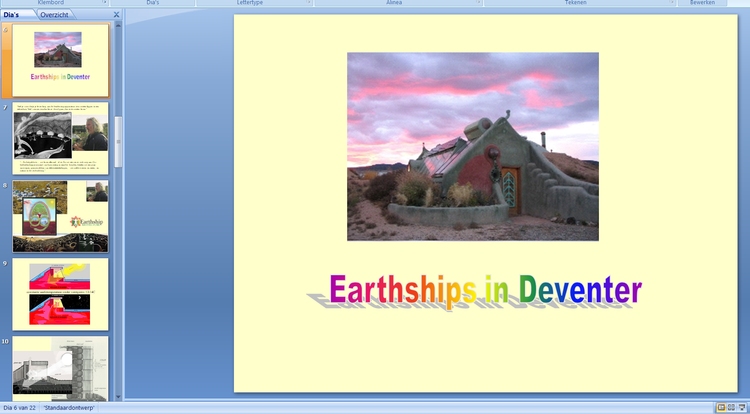
Our story begins in a 1927 row house on Het Bijltje in Deventer. Ruurdtje and Paul read about the beneficial effects of clay plaster and, using a leftover batch of clay, transform their tiny bedroom into a true clay paradise. A friend who comes to visit notices the resemblance to entire homes he’s seen online: “Just look up the term‘Earthship.’”They do, and they’re immediately sold on the idea. That same summer, Paul travels to Sweden to spend two weeks helping build a “Jordskepp” and returns brimming with ideas for building something similar in Deventer.
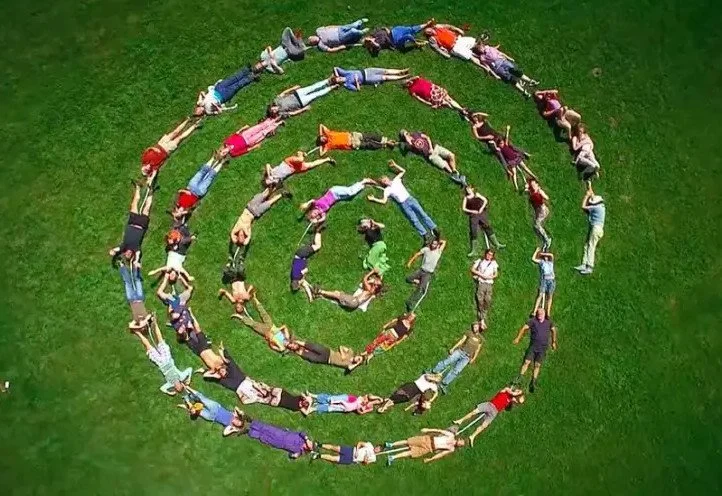
A presentation and a bull's-eye
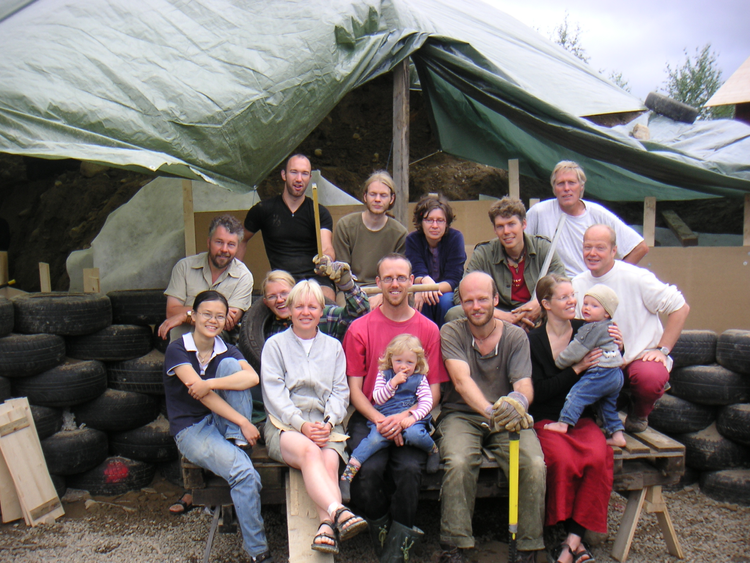
In February, Paul invites ten fellow townspeople to a presentation about his experiences and ideas. Forty people show up, from near and far. A huge success! A repeat event two weeks later draws another thirty-five curious attendees. Ruurdtje and Paul invite all seventy-five to monthly meetings to continue dreaming together and developing ideas. A core group of about thirty people keeps coming—the beginning of what would later become our association.
Monthly meetings
From the very beginning, this group has included three households that still live in their Aardehuis today. The remaining homes were later occupied by people who joined the project at a later stage. But without all those who “dropped out,” we would never have gotten to where we are today. Take Jurgen Tacq, for example, who knew Paul from the Jordskepp construction site in Sweden. Although he knew from the start that he himself would never want to live in an Earth House, he traveled over from Amsterdam every month and volunteered his time to prepare a presentation for the municipality of Deventer.
Establishment of the Association
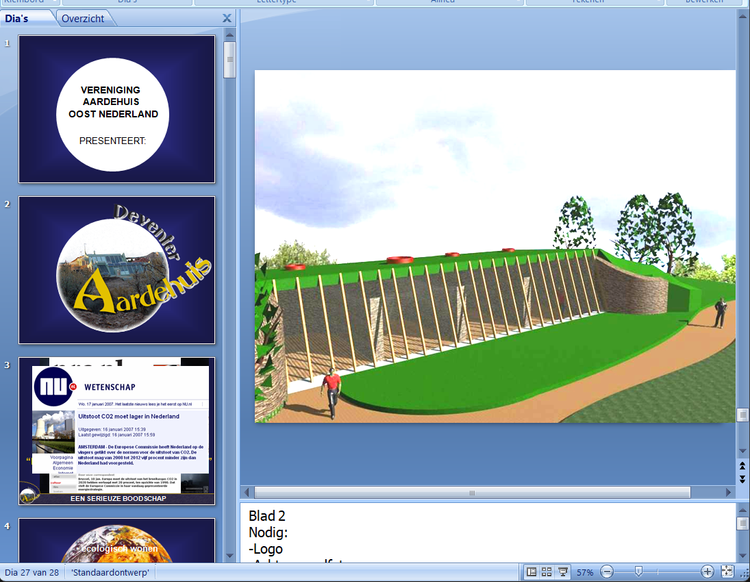
Throughout 2006, it became clear that our initiative was here to stay. Our monthly vision days gave rise to working groups focused on technology, spatial requirements, locations, and liaison with the municipality, with the goal of establishing a partnership. To provide a legal foundation, we established the Aardehuis Oost Nederland Association in November. The name “Aardehuis” gives the tongue-twister “earthship” a Dutch twist, and with its double “A,” it always appears at the top of alphabetical lists. We added “Oost-Nederland” because we suspect our idea will be replicated elsewhere, while we focus on Deventer and the surrounding area.
Inconvenient Truths
In January 2007, we had a meeting with two aldermen from the municipality of Deventer. The weather was remarkably stormy, completely in line with what Al Gore was predicting worldwide at the time in *An Inconvenient Truth*. Unfortunately, the VVD alderman failed to show up, and behind the scenes, city officials begged us not to get involved: two reorganizations had already caused backlogs. The result was a polite rejection from the mayor and aldermen. Even years later, we still occasionally hear that the city regretted that decision in hindsight.
Garbage Warrior
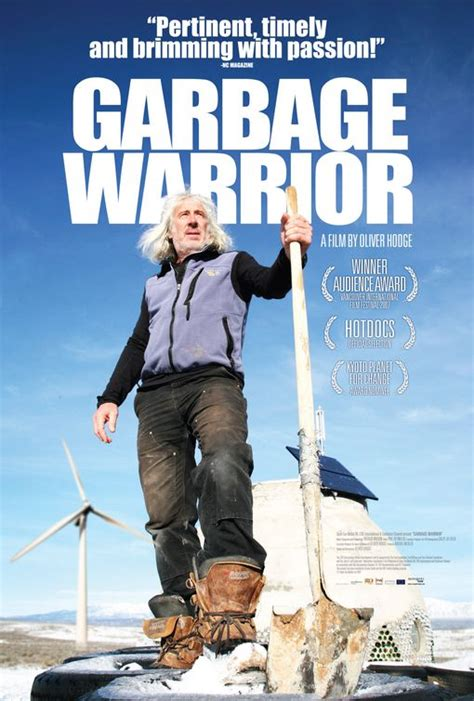
Publicity surrounding our plans led a housing cooperative in Zwolle to commission Earthship creator Michael Reynolds to build a teahouse practically in our backyard. As an association, we are occasionally given the key to the construction fences so we can help with the building over the weekend and gain experience. We also organized a screening of the newly released documentary *Garbage Warrior*, after which the film’s star, Reynolds, held a Q&A session for a packed movie theater. It was a wonderful opportunity to learn from the creator of the concept that inspired us so much.
Contact Olst-Wijhe
Despite all the publicity, we’re stuck in Deventer’s bureaucratic quagmire. But in September 2008, something wonderful happened. One of our members was teaching yoga to a new student, who turned out to be a council member from the neighboring municipality of Olst-Wijhe. He told her about the Aardehuis plans, and the next day he received a call: “How many hectares do you actually need? Because we do have some available.” A week later, we had an introductory meeting and together we looked at the potential construction site on the southern edge of Olst.

Letter of Intent and Feasibility Study
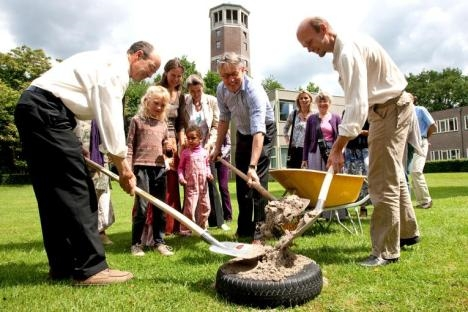
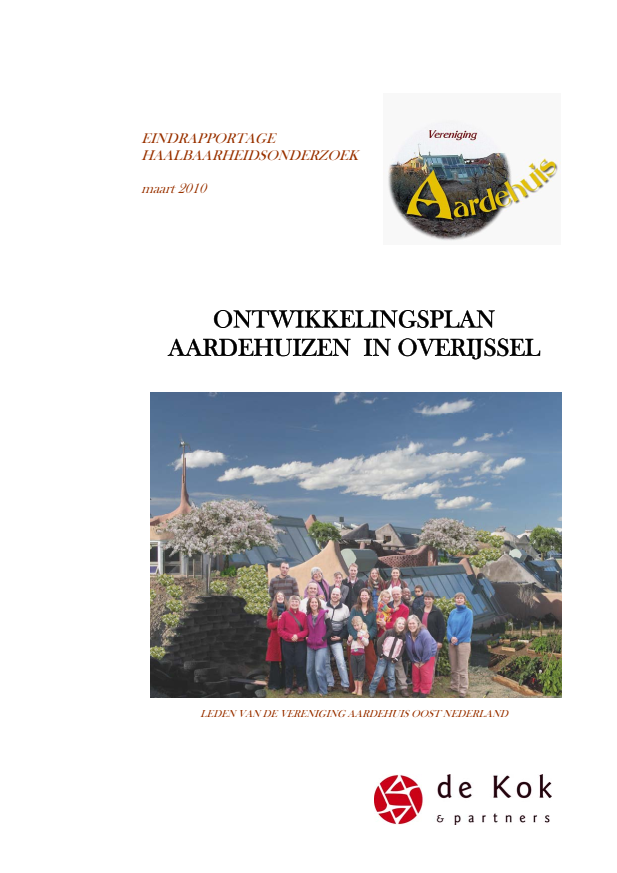
The municipality of Olst-Wijhe has decided to seriously explore whether our plans are feasible. A site visit follows to the Earthship in Zwolle, which is now nearly complete. The housing authority SallandWonen joins the effort to investigate financing options for several social housing units. We launch a feasibility study under the guidance of a specialized firm, and the collaboration between the municipality, SallandWonen, and our association is formalized with an official document—not just a figurative bond.
Start of the design phase
Now that the feasibility study has been successfully completed, we are moving on to the design phase, in which individual preferences will be aligned with collective requirements. In doing so, we’re sticking to one guiding principle: we don’t want this to be a project held together by exceptions, but rather one that demonstrates that building Aardehuizen is possible within the framework of standard laws and regulations. Quite a challenge. We set out to find an architect who could provide us with the best possible guidance in this endeavor, and we ended up choosing Michel Post’s architectural firm, Orio.
The Sociocratic Circle Model
Since 2006, we have been making decisions based on consent, whereby every decision is supported by all members. Because this had not yet been embedded in a sociocratic circle model, it sometimes results in interminably long meetings with all forty members present at once. A number of us are taking a course to restructure our association organizationally. Working groups become interconnected working circles with their own mandates. At the start of the construction phase, we further streamline this into a true nonprofit construction company—one of the key factors in the success of the Aardehuizen project.

Public Perception and Publicity
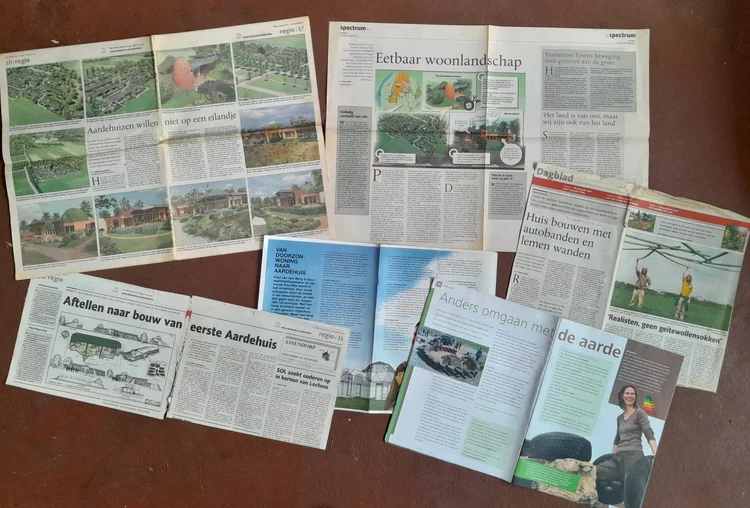
The design phase produces detailed drawings, artist’s impressions, and an urban design plan—all of which make for great visual material for publications in newspapers and magazines. This not only attracts potential construction volunteers, but also gives the residents of Olst a better idea of what will be built: not “molehills” or underground structures, but beautiful, modern homes nestled in greenery. This visibility helps us tremendously in gaining support, both locally and beyond, and sets the tone for what’s to come.
Sustainable Village and Sustainable 100
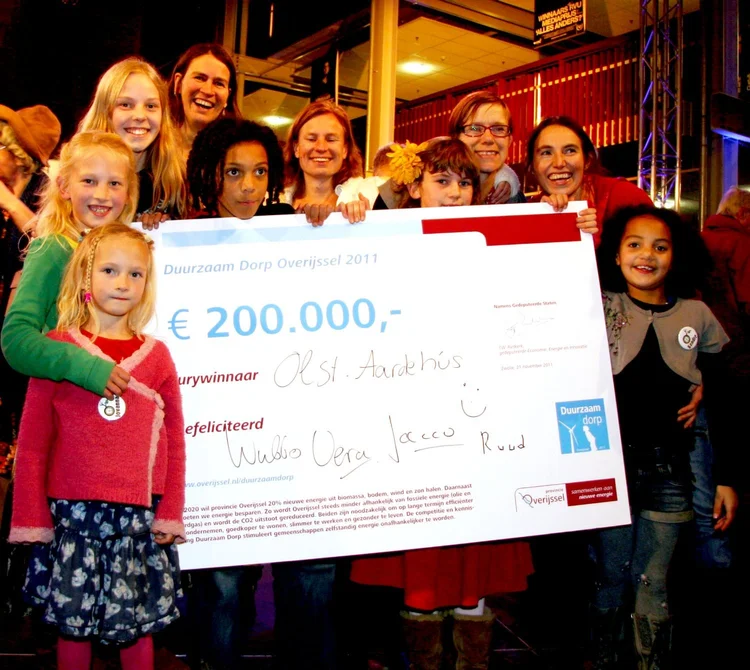
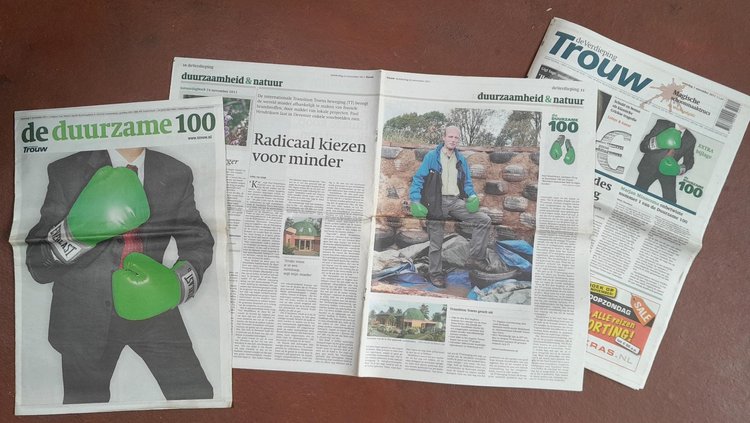
We’re participating in the “Sustainable Village of Overijssel” contest, which offers both a jury prize and a people’s choice award. To win the people’s choice award, we even went door-to-door handing out flyers throughout the entire village. That didn’t pay off, but on an exciting results night, we did receive the jury prize, presented by, among others, former astronaut Wubbo Ockels and former Prime Minister Ruud Lubbers. A month later, we made national news again: *Trouw* ranked Paul—who had started from scratch—at number 25 on the “Sustainable 100” list, in recognition of his efforts for the Aardehuizen and the Transition Towns.
Dig into the ground
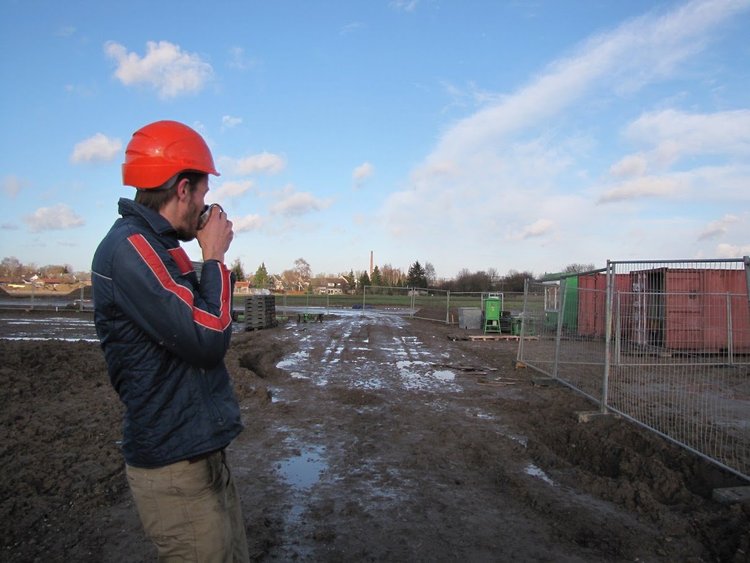
With a final design in hand, we’ll be able to secure the financing. During the feasibility study, we already received letters of intent from banks, but when it comes down to it, we still risk running aground. In the wake of the 2008 banking crisis, banks have become very cautious, and it turns out we’re still too experimental for most of them. Ultimately, one bank is willing to provide financing. The land is purchased for over 900,000 euros, and in December, the construction fences and containers full of building materials are delivered to our newly acquired mudflat.
Our hands are full
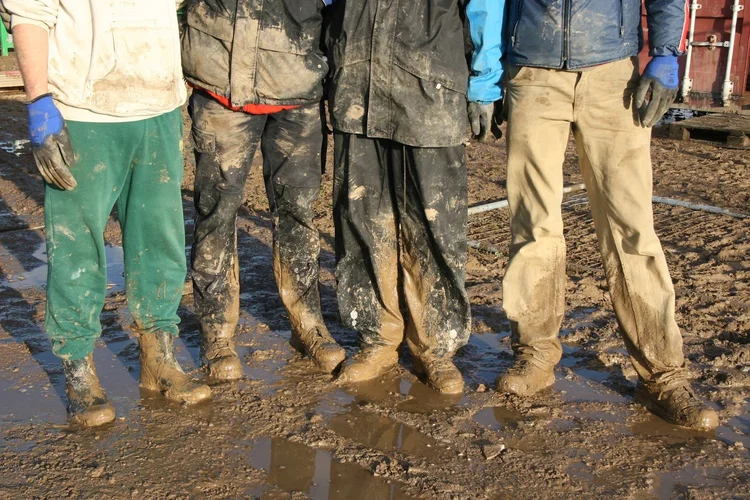
None of the future residents have any experience building their own home, but under the guidance of construction professionals, the first outlines are becoming visible. Every adult commits to working at least one day a week as a construction worker, and we make hundreds of decisions across numerous work groups. Meanwhile, the stream of volunteers who are given a spot on the campground and at the construction site itself keeps growing. What a great group of people from all over the world! Thanks to their arrival, we’re even learning when vacation time is in different countries.
Building Our Network
We’re not just active on construction sites. Collective self-building and ecological community living are becoming popular in more and more parts of the country. In Bergen, a group is purchasing a former military base, and in the south, the Ecodorp Brabant Association is growing. Together with these and other pioneers, we’re laying the groundwork in Deventer for the Ecodorpennetwerk Nederland foundation, later known as GEN Nederland.
Building a broad network fits perfectly with our mission: to build, work, live, and thrive in harmony with nature, in solidarity with one another, and as an inspiration to the world around us.
Switching to straw bale construction
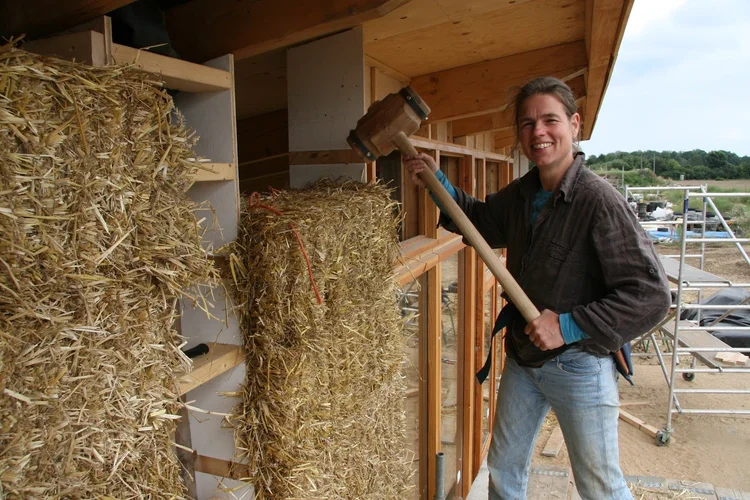
The construction phase has had its highs and lows. The completion of the first two homes in 2013 was cause for celebration, but also for concern: construction was proceeding much more slowly than expected. We reinvented ourselves as an organization, set up specialized teams, and changed our construction concept to save time and money: after building twelve homes with walls made of rammed earth and car tires, we switched to straw bale construction. In June 2015, we crossed the finish line of this three-and-a-half-year construction marathon with the completion of the Middenhuis, our community center.
Local Impact and Spin-offs
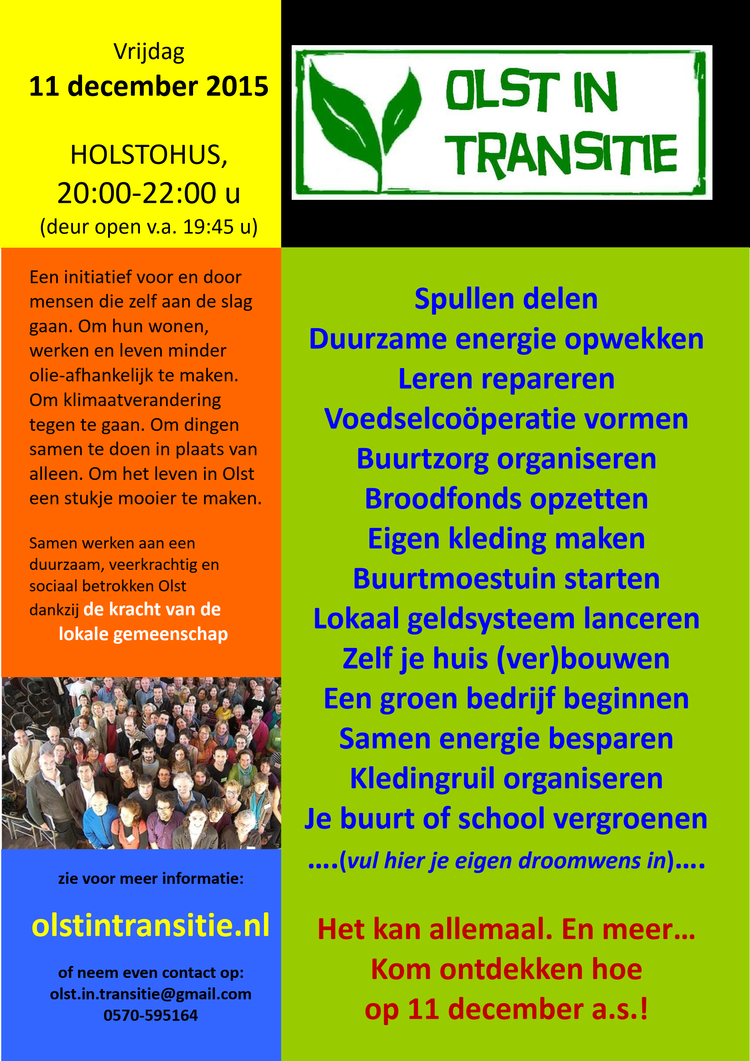
We weren’t able to set up a visitor center, but we made the best of a bad situation. In late 2015, Aardehuizers Jan, Ruurdtje, and Paul launched “Olst in Transition,” focused on local projects that reduce dependence on fossil fuels and foster the emergence of social, economic, and ecological alternatives from the grassroots up. This has given rise to spin-offs such as the Olster Repair Café, the packaging-free shopping initiative ZonderMeer, the sustainability store Goede Buren, and the energy cooperative Goed Veur Mekare. Our ambition regarding local food supply is taking shape through the Eetbaar Olst-Wijhe Foundation, which is helping to transform one hectare of municipal land into a food forest.
Homeowners' Association and Completion of Construction
Even though the construction phase is officially over, you still regularly see Aardehuizers walking around in construction clothes. Each household is responsible for finishing its own home: some hire help, while others opt for a slow, sustainable approach using secondhand materials. This always involves consultation, because everyone is a member of the Homeowners’ Association, and anyone who wants to make changes to the exterior of their home needs approval. In our diverse neighborhood with its own-minded residents, this sometimes leads to significant hurdles. And the biggest ones are yet to come.
Moisture Problems
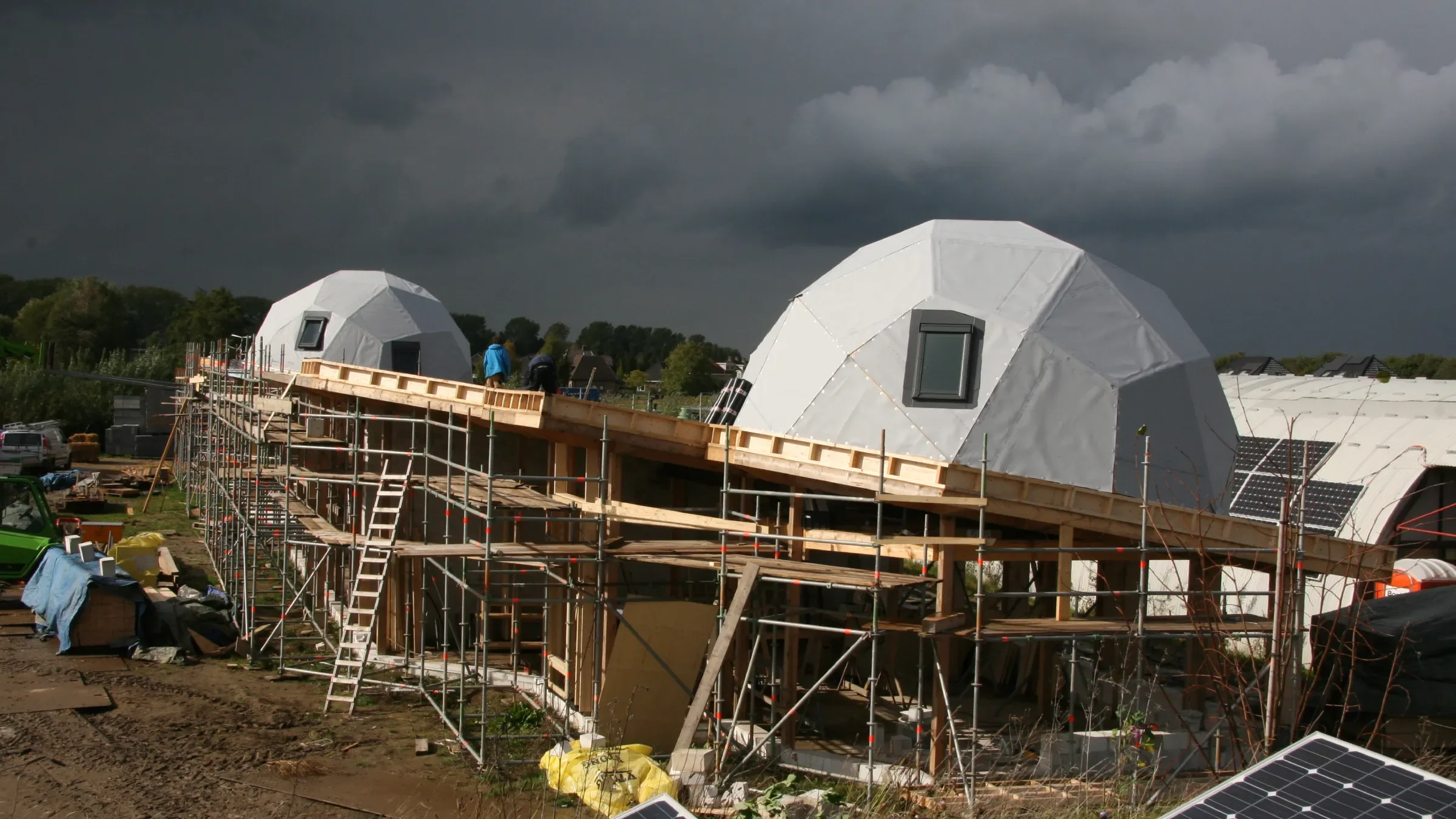
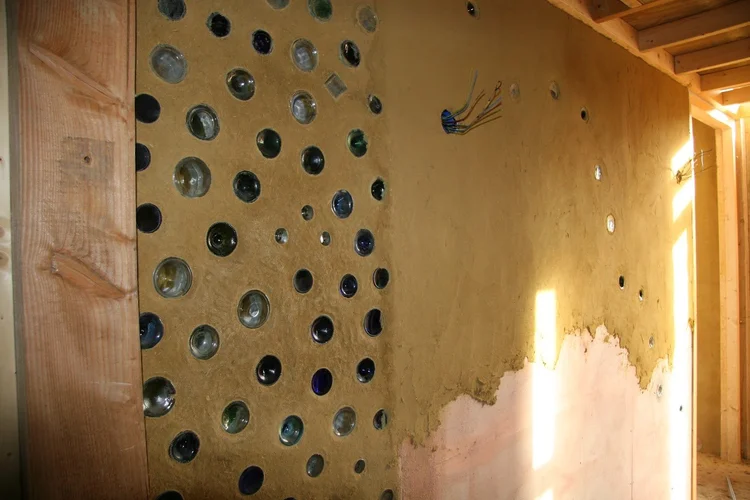
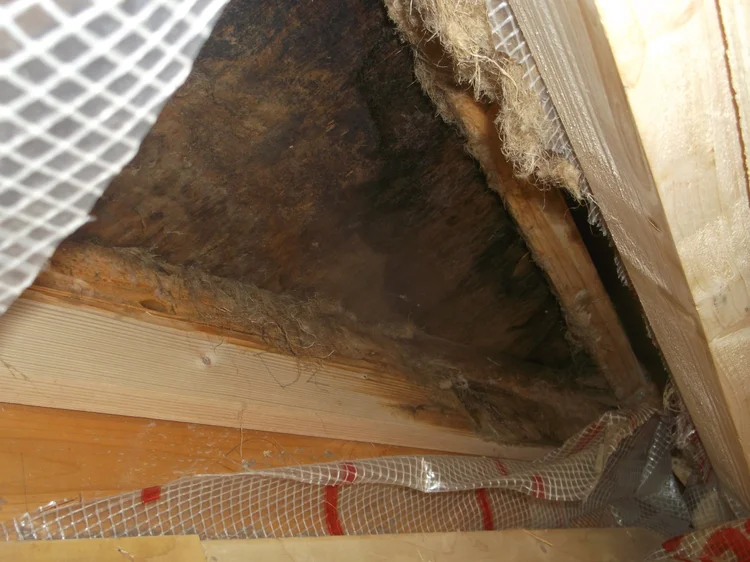
In one of the houses, settlement cracks appear in an interior wall. To our alarm, we discover moisture in the sand layer beneath the floor, which has damaged the roof-supporting columns, and this is happening in all the Earth Houses. We decide together how to address the issue: all columns will be fitted with concrete bases to prevent wood rot. The floors need to be opened up, so we pull our construction gear out of the closet again, and the sounds of sawing and drilling can be heard everywhere. Several roofs also turn out to have moisture problems; three homes get new roofing, and a few domes are replaced. We call that a learning experience.
Energy and Sea Salt
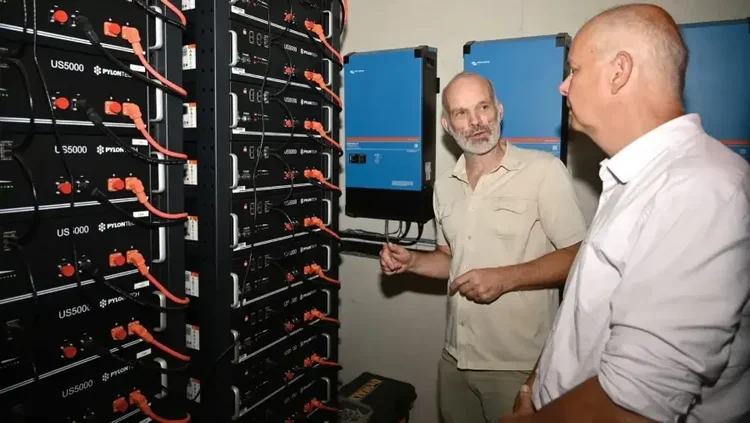
The end of the construction phase doesn’t mean we’re done experimenting. Energy self-sufficiency remains the domain of pioneers who want to accelerate the transition to a sustainable society. We’re partnering with colleges and universities, and forming a consortium with businesses and higher education institutions to experiment with a neighborhood battery powered by sea salt. We are participating in the European SERENE project and have been granted a ten-year experimental status by the national government to build a local smart grid. This is another step toward our dream of self-sufficiency.
Carport with a solar panel roof
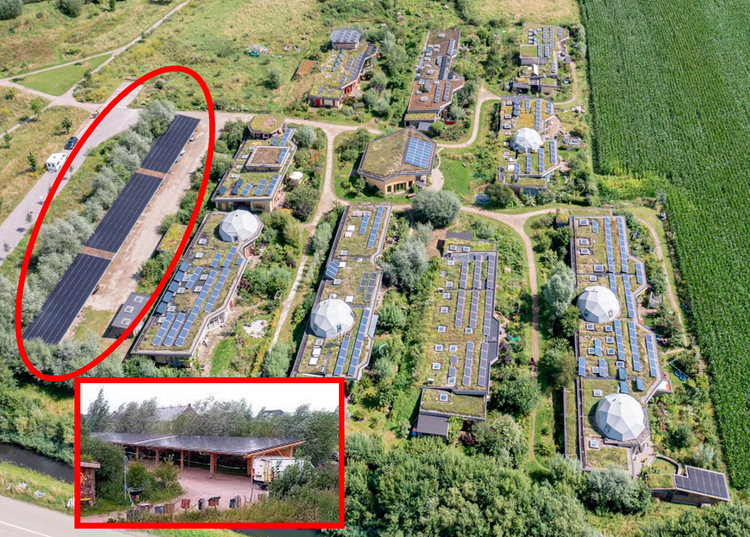
Our desire for self-sufficiency gets a boost when one of the Aardehuizers has a canopy built over the parking lot, with space for 230 solar panels on the roof. The project is funded through an inheritance and a loan; once the loan is paid off, the entire structure will become the property of the association. Because electric car-sharing vehicles and the neighborhood battery charge in tandem, we can smooth out peaks and troughs in our energy demand and reduce the load on the power grid. Thanks to the carport, we’ve become a net energy supplier for most of the year.
A New Association
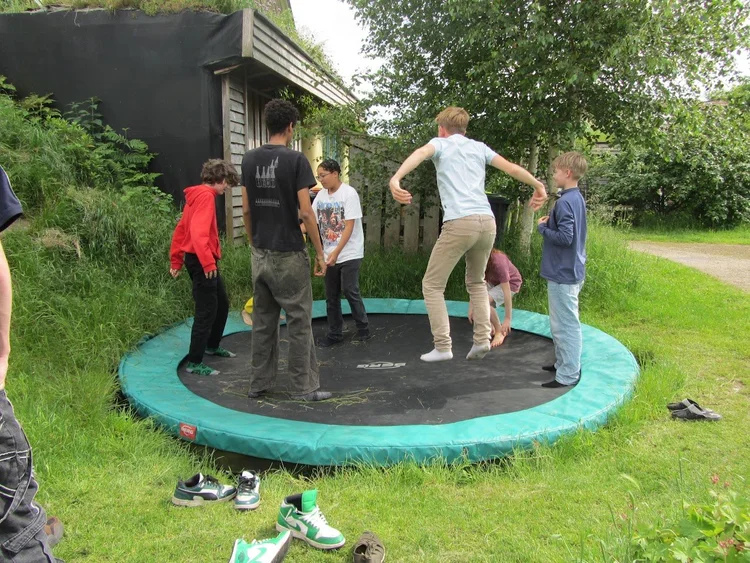
In 2020, we’re switching from the homeowners’ association (VVE) to the Aardehuizen Olst Management Association (BAO). It was mainly the moisture issues that made us realize that a homeowners’ association was no longer the right fit for us. We’ll keep the maintenance budget, but we’re leaving the management of the exterior of the homes out of it. This gives us a lot more breathing room in our community life: we now focus on shared property such as the Middenhuis, green spaces, paths, and finances, organized into working groups with rotating membership. This way, we share knowledge and take turns working with neighbors we might otherwise see less often.
Earth House Festival
Ten years of providing shelter for everyone, twenty years between dream and reality: more than enough reason for us to celebrate. The summer of 2025 featured a four-day Aardehuis Feestival, with a reunion of everyone involved in the construction, workshops, lectures, a live music program, an open Aardehuizen tour, delicious catering, and a daily rotating market full of hands-on activities. GEN Nederland, also celebrating an anniversary, set up a small tent camp in the neighboring food forest. A highlight for many: the first edition of Earth House Conscious Dance, our very own ecstatic dance event. Just like the Earth Houses themselves: here to stay!
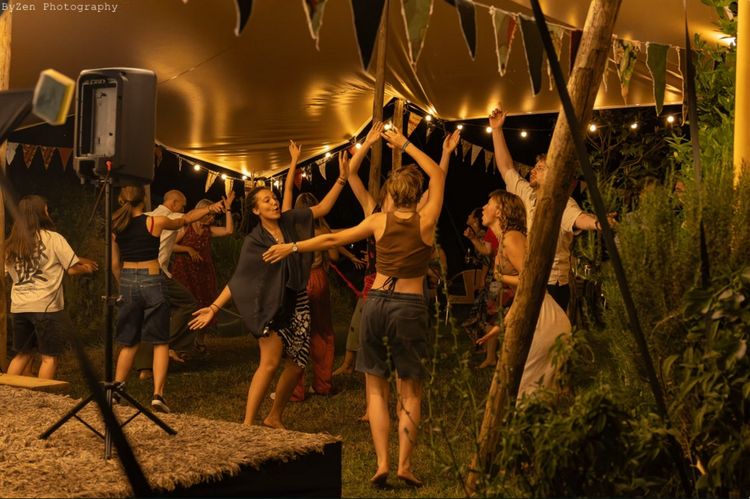
Life at the Aardehuizen
To this day, we continue to work together toward our vision of building, working, living, and thriving in harmony with nature, in connection with one another, and as an inspiration to the world around us.
The actual construction is long behind us, but this year we are carrying out a renovation of the communal Middenhuis.
We’re also still working hard in the food forest, the neighborhood vegetable garden, and other projects in the area. In this way, we continue to build a sustainable future together, connected to one another, and ensure that our thriving community will endure for many years to come.