
Neighborhood Battery, Charging Stations, and Smart Control System in the Aardehuiswijk
In 2025, the Aardehuiswijk neighborhood, in collaboration with Saxion University of Applied Sciences and the University of Twente, established a neighborhood battery as part of the European SERENE project. As part of that project, five charging stations and an Energy Management System (EMS) were also installed in the neighborhood.
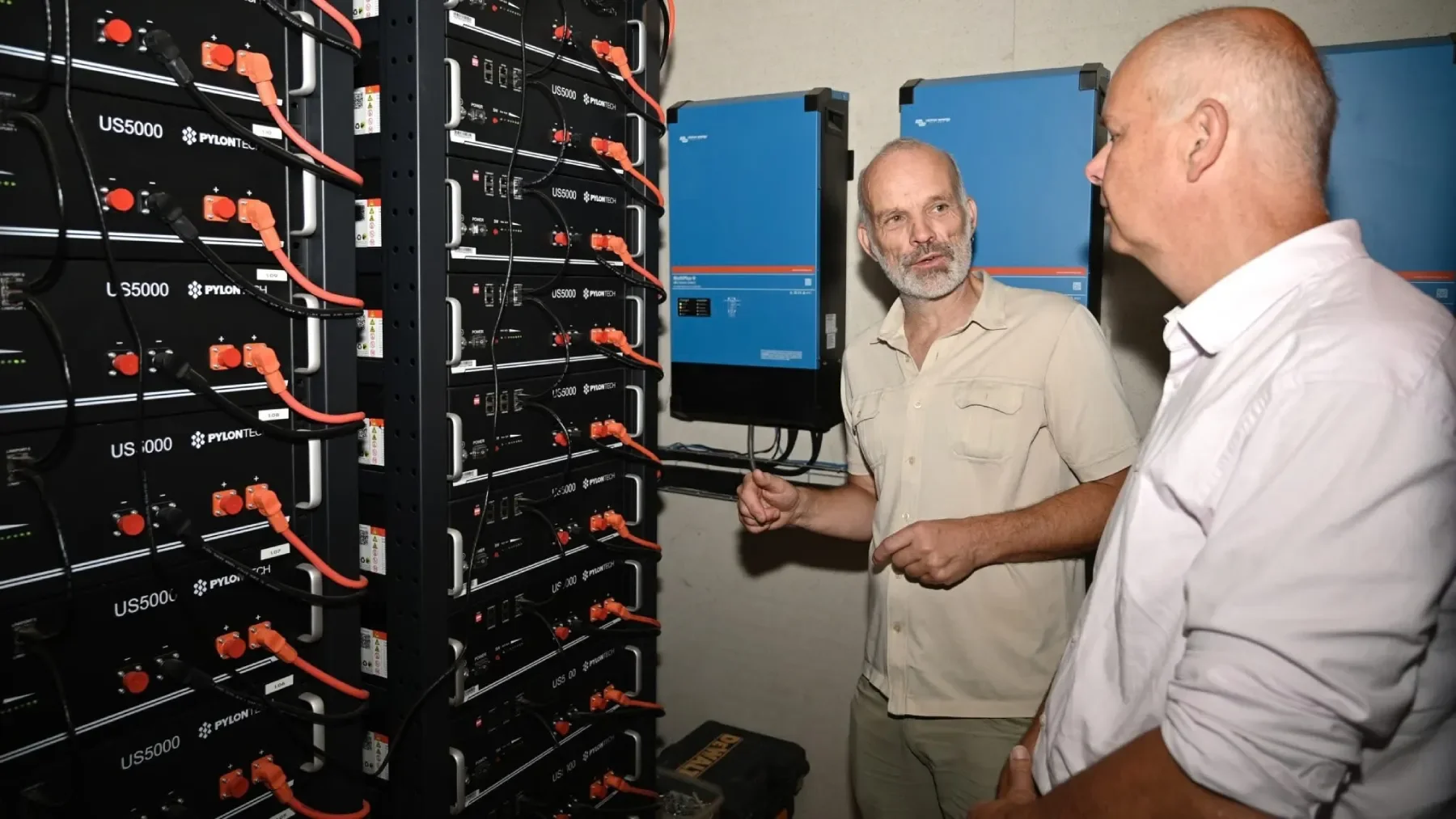
On the left is Ferdi Hummelink (Aardehuizen) and on the right is Councilman Marcel Blind of the municipality of Olst at the neighborhood battery during the opening.
The battery’s energy capacity is 120 kWh. Solar radiation in March alone proved sufficient to charge the battery to a level that fully powered the neighborhood of 24 homes during the hours of darkness. This marked an important step toward self-sufficiency: the neighborhood is a leader in this regard among other residential areas in the Netherlands. Work is currently underway to achieve greater energy autonomy, so that the neighborhood can continue to supply its own power using the battery even in the event of a multi-day power outage in the Netherlands.
A portion of the neighborhood’s annual surplus solar power is used by five charging stations, which are also available to people outside the neighborhood through a car-sharing program. The stations are controlled via an EMS so that, collectively, they do not exceed a certain maximum electrical power, thereby preventing unnecessary strain on the connected neighborhood transformer. Discussions are underway with grid operator Enexis on how the knowledge gained at Aardehuizen can be used to prevent grid congestion in other residential neighborhoods as well.
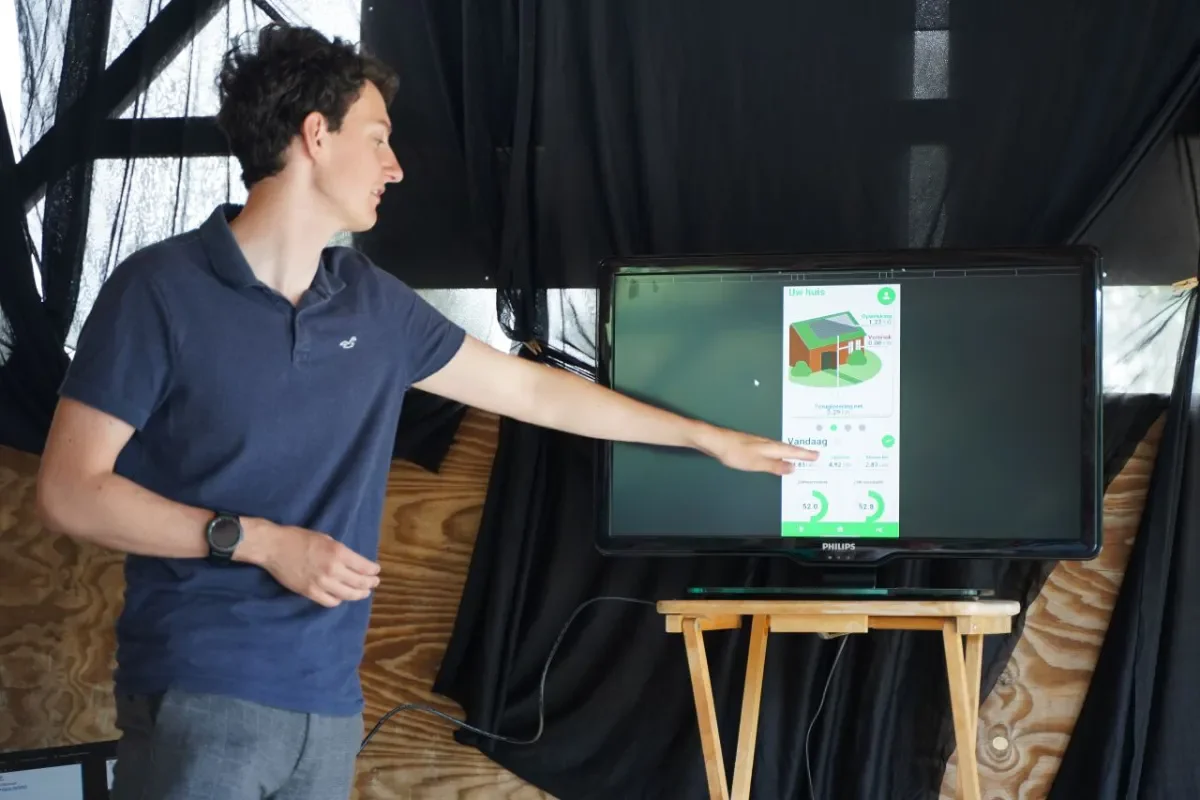
Workshop on the app at the EMS.
Finally, virtually all earth houses have an energy app that allows residents to track their own daily energy usage—as well as that of the neighborhood as a whole—via a monitoring system in the utility closet. This insight leads to a change in energy behavior; residents consume more energy when there is a surplus and less when no solar energy is being generated, which in turn results in lower net CO2 emissions and, on top of that, a lower energy bill!
The project has attracted significant attention both regionally and nationally; the battery was officially opened by the mayor of Olst-Wijhe, the project has been featured in various (trade) media outlets, and it received a visit from the national organization Urgenda. In a letter to Parliament from the Ministry of Climate and Green Growth, the project is explicitly cited as a model for future energy communities.
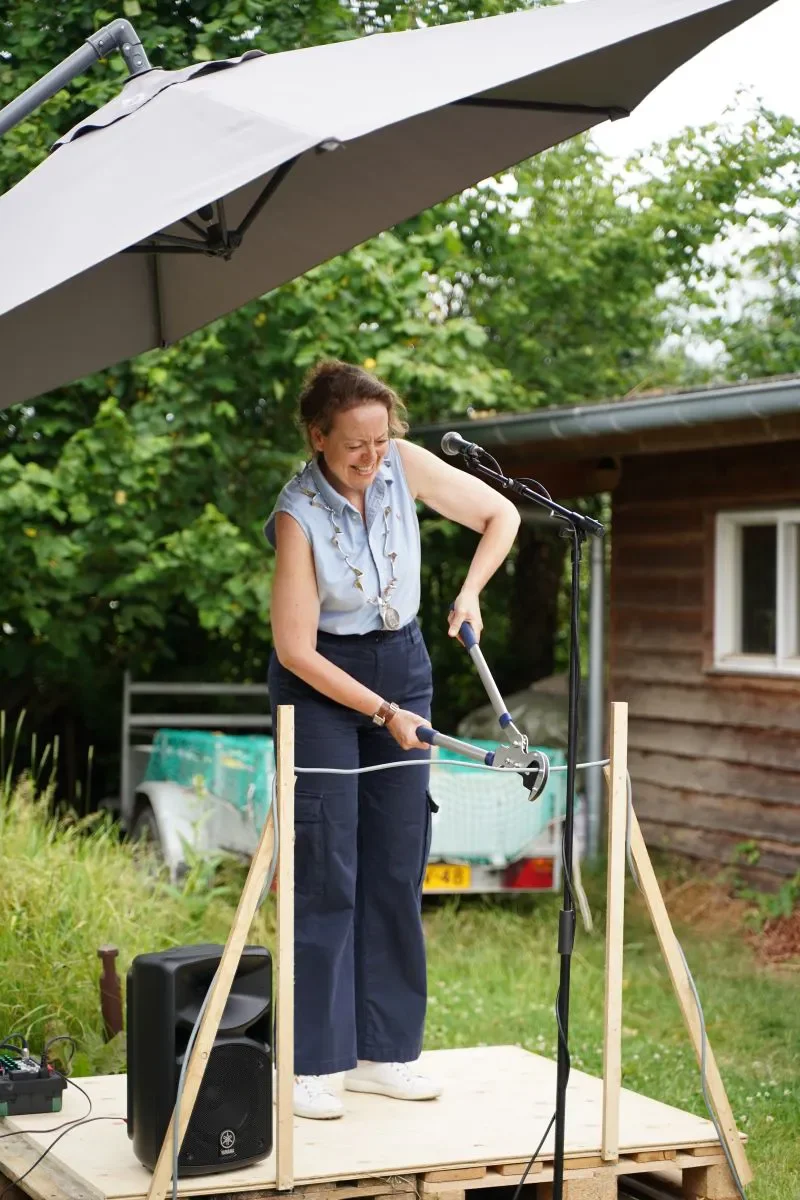
Mayor Poepjes of the municipality of Olst-Wijhe opens the neighborhood battery in a playful way.
Would you like to learn more? Be sure to check out the information in the links below.
More information & links
The Serene Project
https://h2020serene.eu/Urgenda Visit
https://www.facebook.com/Urgenda/videos/regiotour-2025-buurtbatterij-in-olst/1158041446116403/Here in Salland: Article
https://hierinsalland.nl/inbedrijfname-eerste-buurtbatterij-van-overijssel-bij-aardehuizen-olst/Installation Journal
https://www.installatiejournaal.nl/20439/praktijkverhaal-buurtbatterij-van-120-kw-in-olstTW - Trade Journal for Engineering Disciplines
https://tw.nl/buurtbatterij-en-data-maken-duurzame-wijk-aardehuizen-steeds-meer-zelfvoorzienend/
Open Government
https://open.overheid.nl/documenten/0e027974-0a57-4124-be4a-99fad1dc47dc/file (see page 9 at the bottom of the document)